Features built for catalog and merchandising teams to power e-commerce data
Convert raw product content into accurate, export-ready datasets using tools and automation for product categorization, catalog and product data enrichment, attribute tagging, and more for your commerce stack.
Visual annotation built for product catalogs
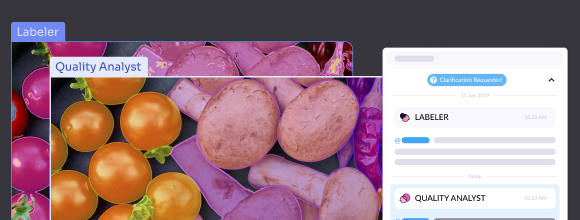
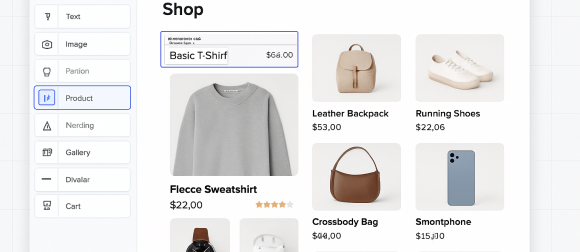
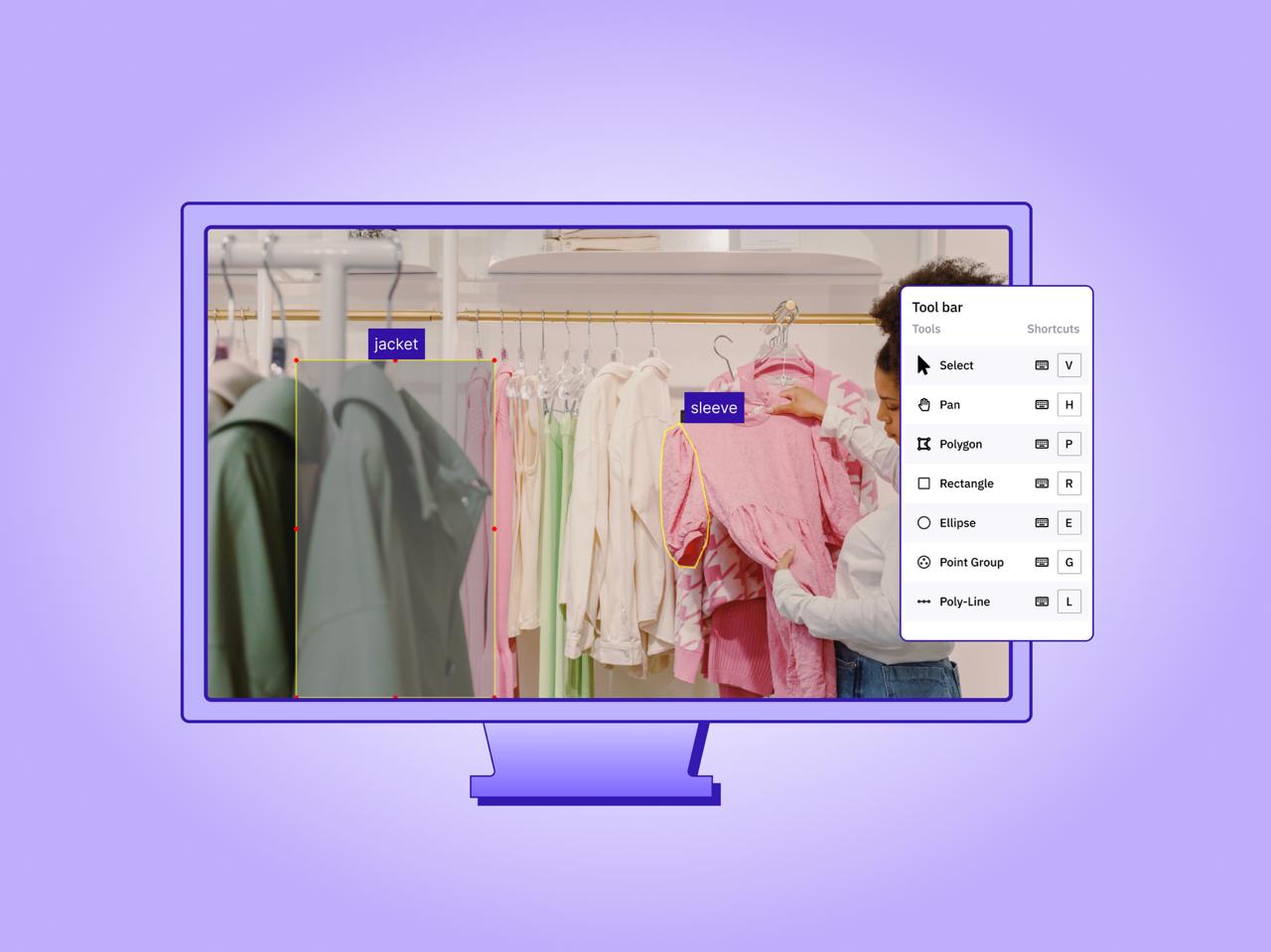
Label product and UGC images and video with boxes, polygons, segmentation masks and keypoints. Category-specific checklists keep galleries consistent and train visual search and similar-item models.
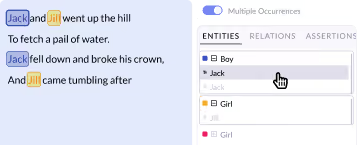
Taxonomy and text annotation for product data
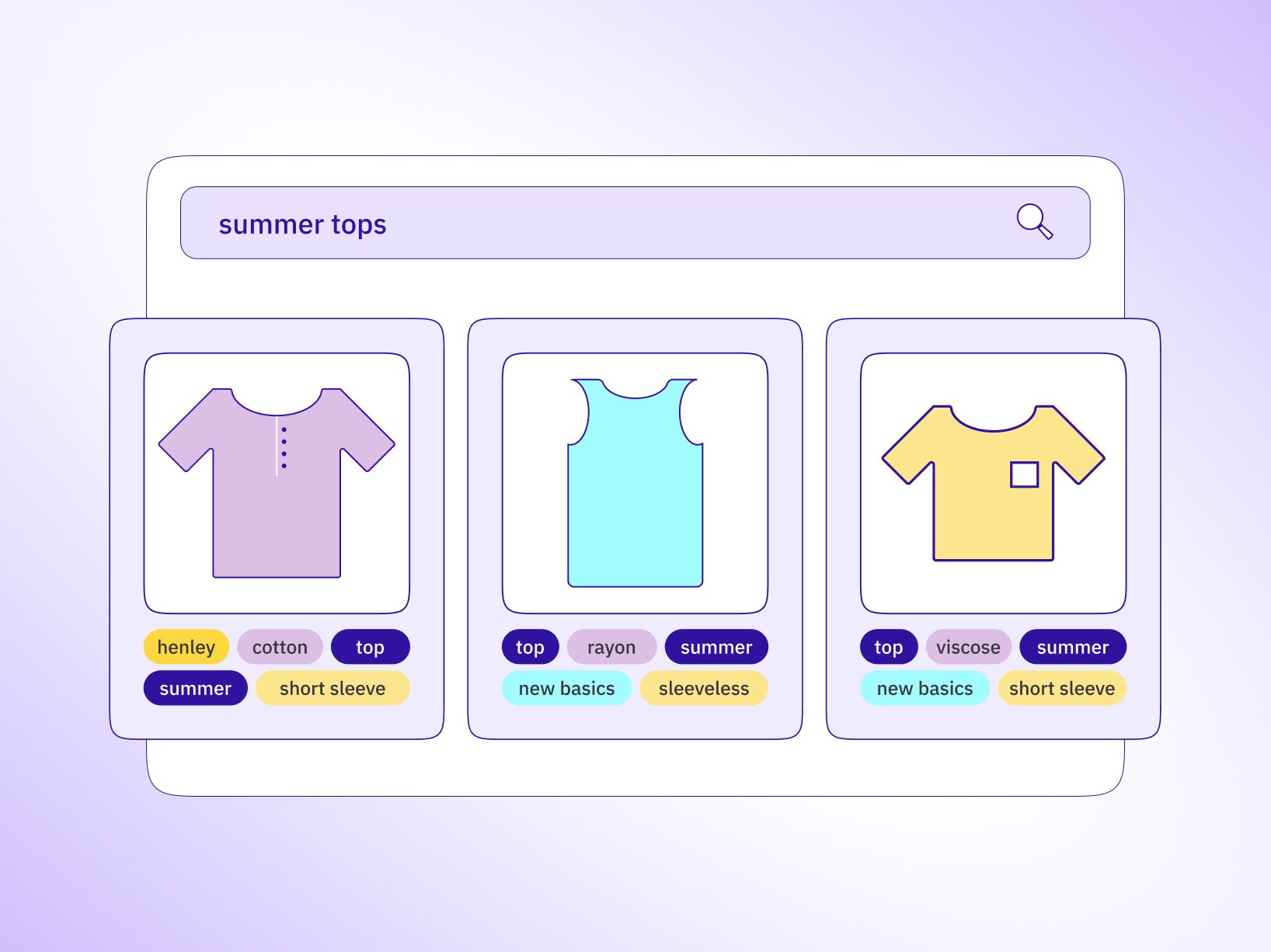
Extract specifications, normalize titles and descriptions, and capture entities and sentiment from reviews and Q&A. Import category hierarchies from CSV or XLS and match vendor values to your field dictionary.
AI pre-labeling with human-in-the-loop routing
Pre-label categories, attributes and image masks with your model endpoints or ours. Bulk-approve high-confidence results and route exceptions to reviewers by skill and SLA.
Multi-layer QC with consensus and golden tasks
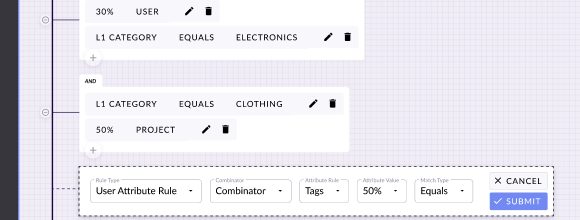
Set review paths, sampling and pass rules. Golden tasks, side-by-side comparison and disagreement scoring stop bad data shipping, while dashboards track accuracy, throughput and unit cost.
Integrations that fit your commerce stack
Connect your e-commerce website builder and sync with product information and digital asset management systems. Export to your cloud storage through APIs.
Enterprise security and data residency
Single sign-on, role-based access and full audit logs, with every change time-stamped. Run in your cloud or region with private-cloud and data-residency options for GDPR.
Top AI training data use cases we have delivered for e-commerce AI
From product taxonomy, search relevance and recommendations to content moderation, store vision, AR try-on, customer conversations and warehouse robotics, Taskmonk drives the data behind clean catalogs and higher e-commerce conversion.
Product taxonomy, tagging & attribute governance
Standardize categories and extract attributes such as size, color and material, with rules and quality checks that keep on-site search clean.
Visual search & product image/video annotation
Label product and UGC images and video for visual search and similar-item retrieval, using category checklists that keep galleries consistent.
Search relevance & query intent labeling
Tag intent, map synonyms and attributes, and grade results across text and voice queries in multiple languages, cutting zero-result queries.
Recommendations & market basket data
Build the similar-item, co-view, co-buy, market basket and bundle signals that lift cross-sell, AOV and retention.
Product matching, variant linking & deduplication
Link variants, remove duplicates and align specs across sellers, including SKU, GTIN and UPC mapping, so catalogs stay clean.
Review sentiment analysis & Q&A NLP
Extract pros and cons, sentiment and entities from customer text, and flag spam or policy violations for moderation.
Vendor catalog OCR & document ingestion
Parse vendor PDFs and images for titles, specs, prices and barcodes into validated fields, speeding up onboarding and refresh cycles.
Customer support & sentiment data
Label support calls and chats with speaker turns, sentiment, emotion and intent across languages, for support bots and quality models.
Warehouse & fulfillment robotics data
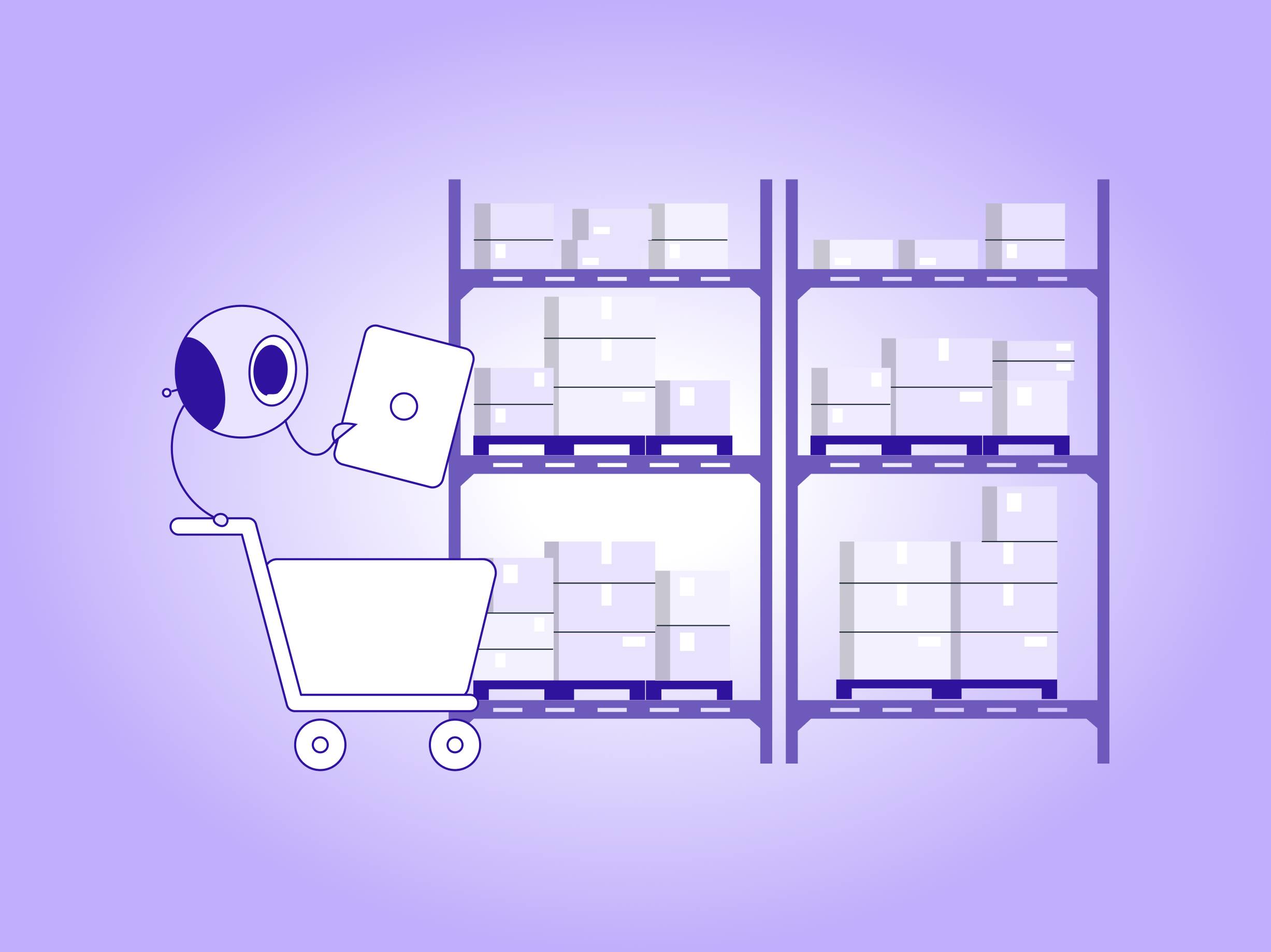
Annotate LiDAR point clouds and camera data for racks, pallets, forklifts and people, so robots detect obstacles and plan safe paths.
AI data collection services
Collect product photos, audio and video in the field with Nimble, the Taskmonk mobile app, and feed them straight into labeling workflows.
Content moderation services
Label listings, images, video and reviews for policy violations, counterfeit or restricted items and spam, and escalate edge cases to trained reviewers.
Store vision & loss prevention
Label shelf, aisle and checkout video for stock gaps, planogram compliance and unscanned items, powering inventory and cashierless checkout models.
AR staging & virtual try-on data
Produce the segmentation masks and keypoints that place products, fit and size in the shopper's space or on their body.
GenAI ad & product content evaluation
Review generated ads, descriptions and images for accuracy, brand fit and hallucinations, and turn flagged errors into fine-tuning data.
The complete execution layer for your E-commerce AI data
Taskmonk's operating model for high-quality AI data, applied to catalogs, search, recommendations and customer conversations.
Catalogs, images, and records are encrypted in storage and during transfer, ensuring sensitive data is never exposed
Compliance built-in
Taskmonk runs on Azure data centers that are SOC 2, ISO 27001 and HITRUST compliant. Workflows are designed to align with GDPR.
Flexible deployment
Keep data in your own cloud buckets. Taskmonk syncs labels in place using role-based access and private links, with no copies required.
Taskmonk supports global e-commerce teams across 3 continents, with 10+ years of excellence
One execution layer for marketplaces, global retailers and fulfillment-robotics teams.
Proven at scale
900M+ labeling tasks at up to 99.9% accuracy. Teams flex from 18 to 1,200+ associates on demand, and some programs have run for 8+ years at 4M tasks a month.
Trusted by enterprises
A global e-commerce platform replaced a 750-person multi-vendor labeling operation with one Taskmonk platform.
Measurable outcomes
$310,000 saved in year one with a 15-day payback. Seller onboarding fell from 6 weeks to 1 week, and clients have saved $20M+ overall.
Reliable delivery
99.9% uptime on Azure, 7 million labeling hours clocked and 5,023+ concurrent users.
We scope the task, define guidelines, set up workflows, and QC in the Taskmonk platform. One point of contact, weekly SLAs, and in-platform dashboards for progress.
Catalog, search and product intelligence experts
Trained teams in product taxonomy, attribute tagging, catalog enrichment, text and image labeling, and customer conversation annotation, with multilingual and vernacular support.
Quality and scale
Gold-task validation, continuous performance monitoring and multi-level QA with adjudication. Scale from 18 to 1,200+ associates on demand.
Proof of concept
Share a sample dataset & SOP, and goals. We'll stand up a workflow, assign annotators, and return labeled samples with a QA report in 24-48 hours.
Expert qualification
Every expert is screened, assessed, evaluated on real sample tasks, certified on your guidelines, then deployed. Only qualified experts enter production.
Where e-commerce AI connects
The modality pages your e-commerce AI stack touches, from catalog imagery to calls to warehouse floors.
E-commerce data annotation labels product images, text, search queries, reviews and customer conversations so AI models can learn from them. Taskmonk delivers AI training data that standardises product catalogs and improves search relevance and recommendation accuracy, using pre-labeling automation, platform workflows and trained experts.
What types of e-commerce data can Taskmonk annotate?
Under e-commerce data annotation services, Taskmonk supports product images, videos, titles, descriptions, attributes, specifications, reviews, Q&A text, receipts, catalog PDFs, and customer support calls and chats, giving you one platform for all retail e-commerce data.
What is product taxonomy?
A product taxonomy is the category hierarchy that places every item in one consistent path, for example Apparel > Women > Dresses > Maxi dresses, with attributes such as color, size and material. Annotation applies the path and attributes to each product so search, filters and recommendations read the catalog the same way.
What is automated product tagging?
Automated product tagging uses AI to assign attributes such as color, size, material and style to catalog items. Taskmonk pre-labels the attributes, approves high-confidence results in bulk, routes the rest to trained reviewers, and exports validated fields to your commerce stack.
What is search query annotation?
Search query annotation labels shopper queries with intent, product type, attributes and constraints such as price or delivery. These labels train ranking models to return relevant results, including for multilingual and long-tail queries.
How does pre-labeling improve speed and quality?
AI-assisted pre-labeling suggests categories, attributes, and image masks automatically. High-confidence labels are accepted in bulk, while low-confidence cases are routed to human experts, reducing turnaround time without compromising accuracy.
Can Taskmonk handle multilingual catalogs?
Yes. Taskmonk supports titles, descriptions, and attributes in multiple languages and locales. You can validate translations, capture localized values (like sizes or currencies), and keep catalogs consistent across regions.
Can Taskmonk label customer support calls and chats for sentiment?
Yes. Teams label call audio and chat text with speaker turns, sentiment, emotion and intent, then tag escalation and resolution points. Audio and text run on the same platform and QC stack.
Does Taskmonk support warehouse and fulfillment robotics data?
Yes. Taskmonk annotates LiDAR point clouds and camera data for warehouse robots, including racks, pallets, forklifts and people.
What business outcomes can I expect from using Taskmonk?
E-commerce teams see faster catalog onboarding, cleaner product data, more accurate search results, and improved recommendations. These lead to higher conversion rates, reduced returns, and stronger overall customer experience.