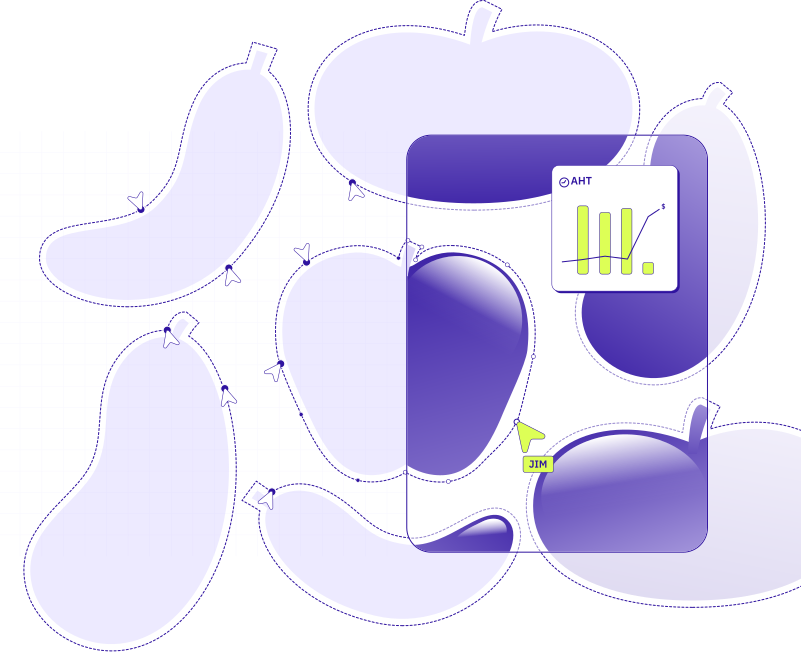
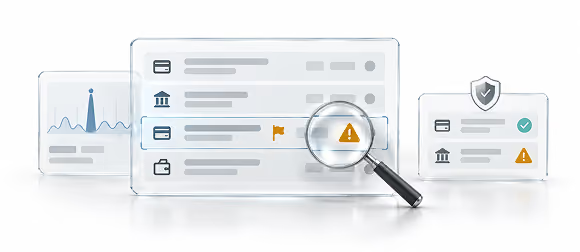
The same document, transaction, and conversation annotation stack adapts to the workflow.
Financial Document Processing
Prepare training data for models that extract, classify, and validate information from invoices, bank statements, loan files, claims documents, disclosures, and other semi-structured financial records.
Fraud Detection Systems
Label transaction histories, account activity, and review outcomes to help models identify suspicious behaviour, flag anomalies, and improve fraud monitoring across payments, banking, and fintech workflows.
Credit Risk and Underwriting
Annotate income documents, financial statements, loan applications, and supporting records used to train models for borrower assessment, risk scoring, and underwriting workflow automation.
KYC and Identity Verification
Structure identity documents, onboarding forms, declarations, and verification records so AI systems can support customer due diligence, document checks, and onboarding review workflows.
Regulatory Compliance Monitoring
Label financial records, case data, communications, and transaction patterns used in compliance review, audit support, reporting checks, and rules-based monitoring across regulated finance operations.
Customer Support and Banking Assistants
Annotate chat, email, and call transcripts for intent detection, routing, escalation, and response training so finance support assistants can handle customer queries more accurately.
Built on Named Models and Structured-Data Tooling You Can Verify
Document extraction, transaction-level structure, and conversational data, covered by name, not generic claims.
Document and KYC Extraction
Mistral OCR reads statements and identity documents; Mistral Document Query pulls named fields (account numbers, dates, amounts) for review before a human opens the file.
Transaction and Tabular Data
Row-column table capture plus bulk CSV/Excel and real-time streaming ingestion structure transaction and credit data at the field level, the mechanic underneath Fraud Detection and Credit Risk Underwriting.
Conversational and Multimodal Data
A single editor spans text, audio, and conversational transcripts, for truly multimodal usecases like Customer Support and Banking Assistants.
The Data Behind Finance AI, Covered End to End
From scanned documents to live transaction streams, structured and annotated for the models you're actually training.
Financial Documents
Includes invoices, bank statements, loan files, claims records, disclosures, tax forms, onboarding packets, and other financial records requiring classification, extraction, and validation.
Transaction and Tabular Data
Transaction logs, ledger entries, payment records, reconciliation files, account activity, and structured finance data are used for categorization, analysis, and fraud-related workflows.
Customer Conversations
Support emails, chat transcripts, call-centre conversations, collections interactions, and service records are used for intent labeling, routing, escalation, and assistant training.
Financial Text and Reports
Research notes, policy documents, analyst commentary, internal case notes, earnings transcripts, and compliance text are used for classification, entity extraction, and review workflows.
Scanned and OCR-Heavy Records
Image-based forms, scanned statements, handwritten submissions, and low-structure financial records requiring OCR review and preparation for extraction.
Multi-Source Finance Datasets
Workflows that combine documents, extracted fields, reviewer decisions, transaction records, and customer communication into one training or validation pipeline.
Move from Manual Review to Verified Extraction with Taskmonk
Named models, automatic exception routing, and human verification on every KYC or compliance-sensitive field.
Automation for Pre-Labeling
Cutting edge Prelabeling models and Document Query read every statement and identity document first. Fields are extracted and structured before a reviewer ever opens the file.
AI Ops Workflows
Row-column table capture, bulk CSV/Excel, and real-time streaming ingestion route transaction and credit data automatically. Low-confidence fields get flagged and sent for review; everything else keeps moving.
Qualified Human Expertise
KYC, financial, and compliance-trained reviewers run Maker-Checker, Consensus, and Maker-Editor review on every flagged field, low-confidence extraction, or KYC mismatch, before data ships.
Where Finance Data Work Continues
The document tooling and compliance infrastructure behind this page.
The process of labeling finance-related data so AI systems can understand and use it: financial documents, transactions, customer conversations, and financial text, structured into training datasets for finance AI workflows.
Why is human review important in finance AI datasets?
Finance datasets carry complex records, edge cases, and inconsistent formats. Every flagged field goes through maker-checker review: pre-labeling automation handles first-pass extraction, a second reviewer verifies before data ships.
How does Taskmonk handle KYC and identity verification data?
Mistral OCR and Mistral Document Query extract and structure identity documents and statements, with flagged or low-confidence fields routed to a second human reviewer before data ships.
How does financial data annotation support enterprise compliance?
Labeled documents, transactions, and communications feed KYC records, regulatory filings, and audit-related review under SOC 2, ISO 27001, and HITRUST-aligned infrastructure.
How does financial data annotation support fraud detection?
Labeled transaction patterns, account activity, and fraud indicators train detection models to identify anomalies, suspicious behavior, and unusual spending patterns.
Verified Data for the Finance Models You're Actually Building
Documents, transactions, and conversations for Finance AI extracted, structured, and human-verified before it reaches your model.