The Multimodal Data Annotation that
F500Enterprises
Run in Production AI
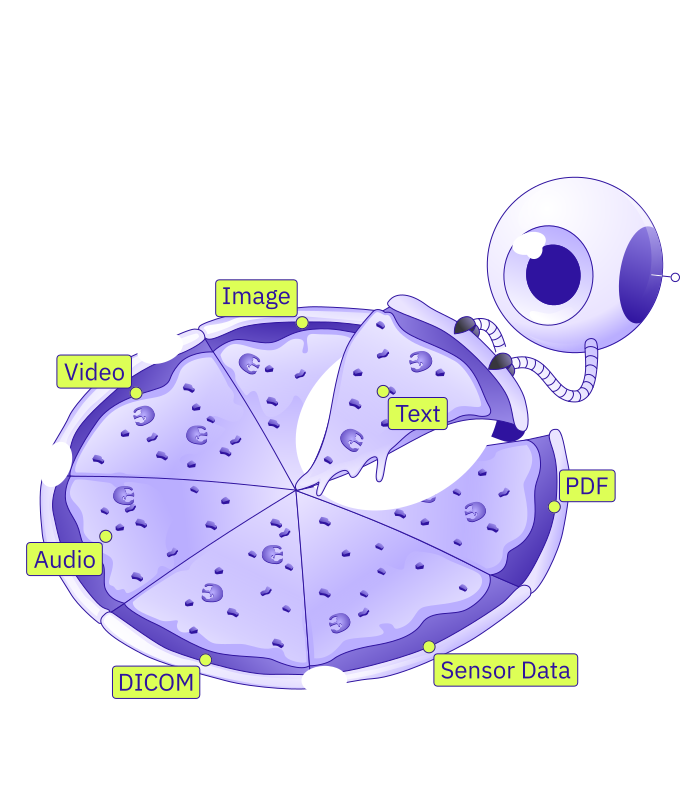
Proven on 900M+ transactions with 99.9% uptime. AI pre-labeling, workflow orchestration and qualified human experts, delivering image, video, text, audio, document, LiDAR and DICOM data in one platform.
Features that keep multimodal data programs moving
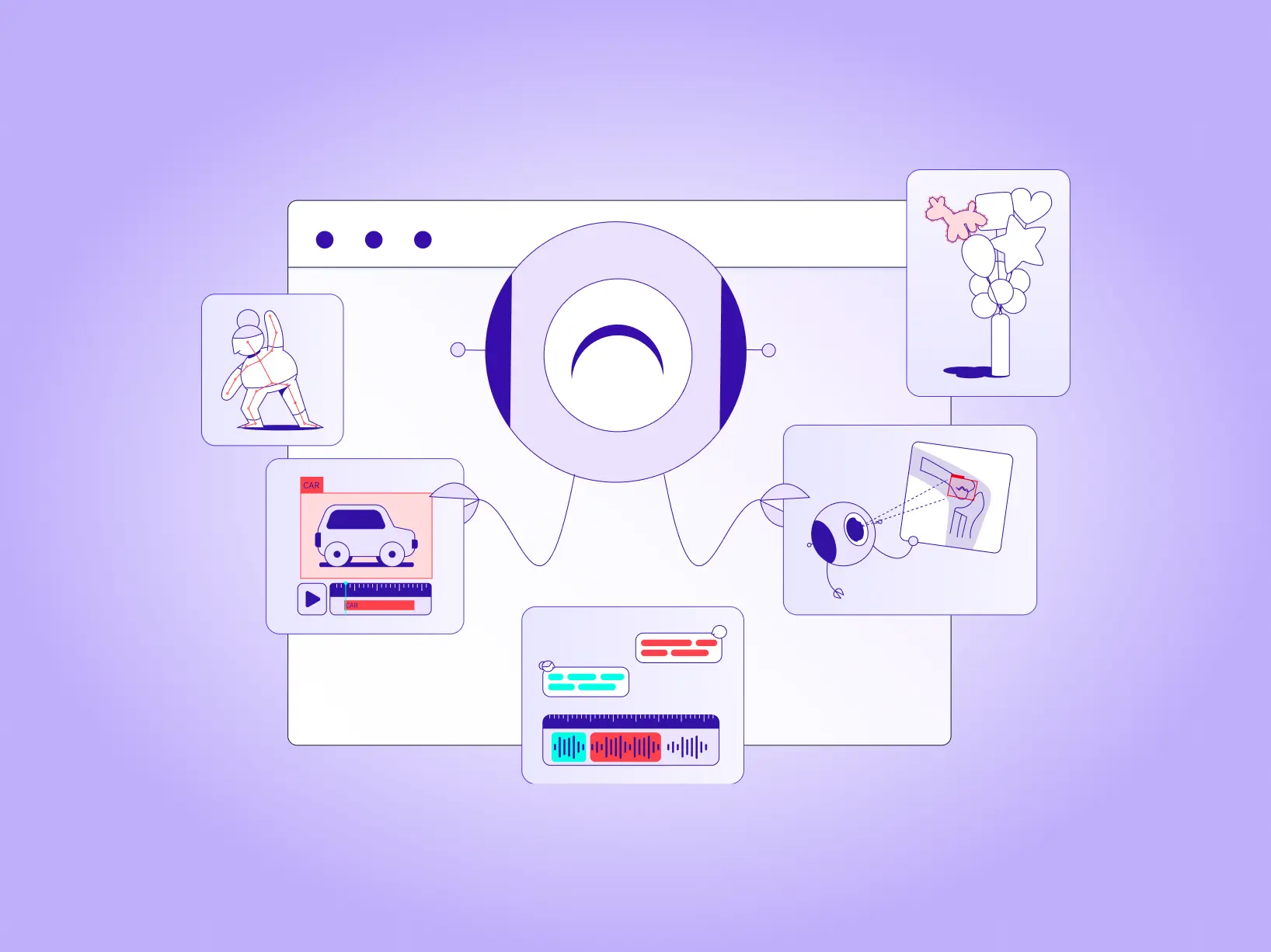
One system to label, check and ship multimodal data across images, video, text, audio, documents and LiDAR.
One labeling interface for every data type
Purpose-built tools for image, video, text, audio, document, LiDAR, DICOM and geospatial work, all in one workspace.
Linked, cross-modal tasks
Transition automatically between projects across modalities. Use transcribed audio text in NER projects, and support point cloud and video together in LiDAR.
Multimodal datasets and batches
Split large imports into batches, track each through its lifecycle, then browse, search and download results in Gallery view.
Collaboration and integrations
Comments on rejected tasks and rule-based task assignment keep teams aligned. Connect your stack through the REST API and Python or Java SDKs.
One workflow for every data type
Set up tasks, routing and review once that work across image, video, text, audio, LiDAR and DICOM work with the same quality rules.
Define tasks, roles, routing and pass criteria, then connect annotate, review and consensus stages without code. Configure projects to flow between data types, so the output of one feeds the next.
Label, review, adjudicate
Start from pre-labels, with tracking and interpolation for video and OCR or speech-to-text for documents and audio. Disagreements go to a reviewer, and execution levels stop batches that miss quality thresholds
Export
Export to S3, GCS or Azure in COCO, YOLO, Pascal VOC, JSON, JSONL or CSV, straight into your training pipeline. A time-stamped audit trail records who labeled, edited and approved each task.
Secure multimodal workflows at scale
Your data stays in your cloud, behind enterprise access controls.
Multimodal data annotation labels more than one data type together, such as images with text or video with audio, and keeps the links between them aligned. It builds the training data for models that learn from several inputs at once.
Which data types can Taskmonk label in one platform?
Image, video, text, audio, document, LiDAR, DICOM and geospatial data run on one platform, with shared workflows and QA.
How does pre-labeling work across data types?
Models pre-label the data: SAM-3 for segmentation, Mistral OCR for documents, Whisper and Google speech-to-text for audio, and your own models. Experts review the output before export.
How is quality kept consistent across data types?
Maker-Checker, consensus and golden tasks apply to every data type, with expert arbitration on ambiguous cases.
What export formats and integrations are available?
Export COCO, YOLO, Pascal VOC or JSON, write results to S3, GCS or Azure, and connect through the REST API and Python or Java SDKs.
How are annotators vetted and onboarded?
Experts are screened, assessed on skills and domain knowledge, trained on your guidelines and certified on sample tasks. Only certified experts enter production, and gold tasks track their accuracy.
Can Taskmonk run in our cloud?
Yes. Projects can run in a dedicated VPC, with data read from your own S3, Azure or GCS buckets.
Does Taskmonk support RLHF and model evaluation data?
Yes. Build preference-ranking and response-evaluation tasks across text, image, video and audio, and export the results for alignment and fine-tuning.
How is pricing structured?
Platform access is $60 per active user per month, billed only for seats used that month. Managed annotation services are scoped per project with a fixed quote before work starts.
How do we start?
Start with a proof of concept: share a sample dataset and guidelines, and labeled samples return with a QA snapshot in 24 to 48 hours.
See your multimodal workflow in action
Share a small dataset and goals. A workflow is configured, a subset labeled, and a QA snapshot returned within 24 to 48 hours