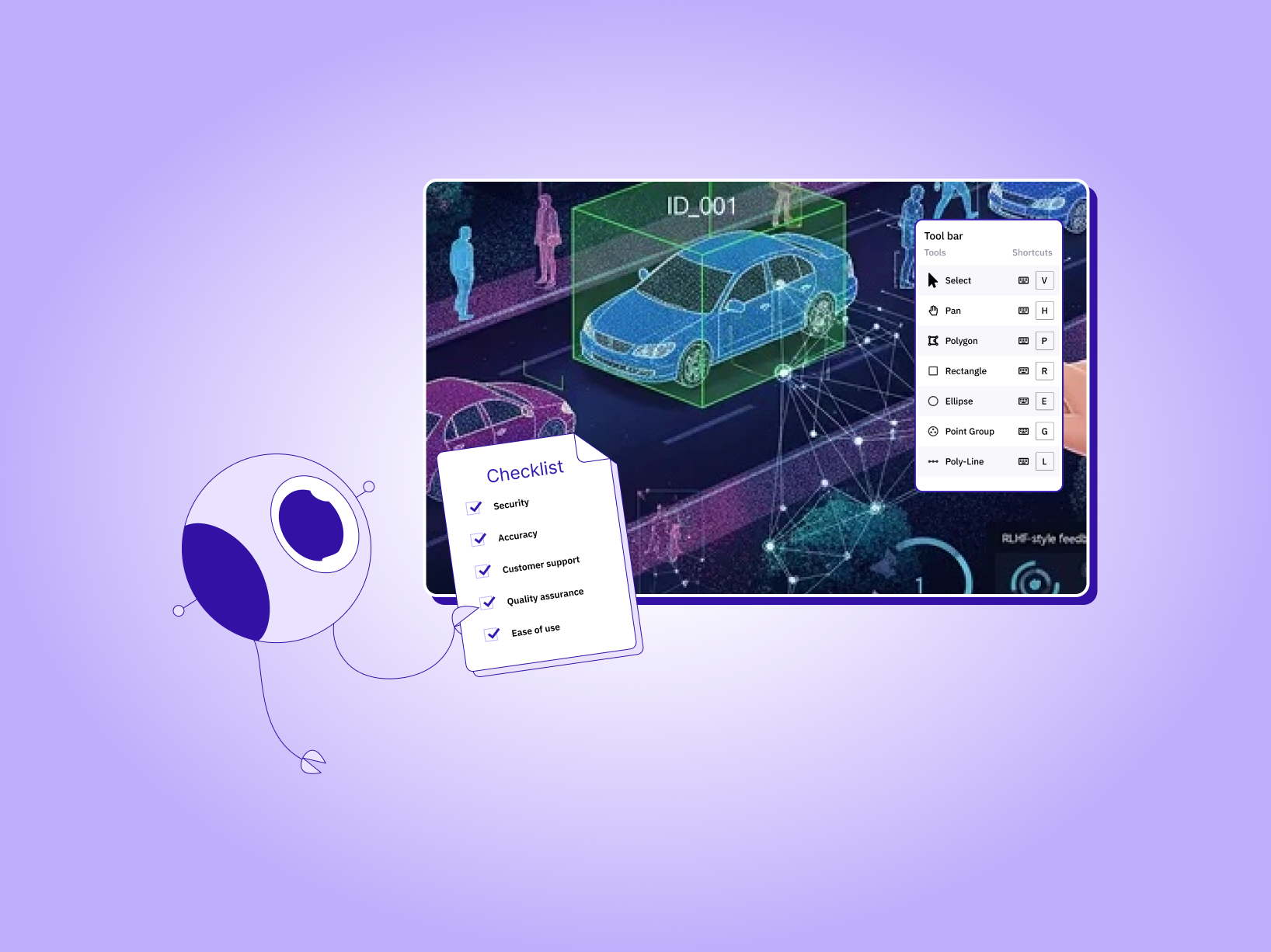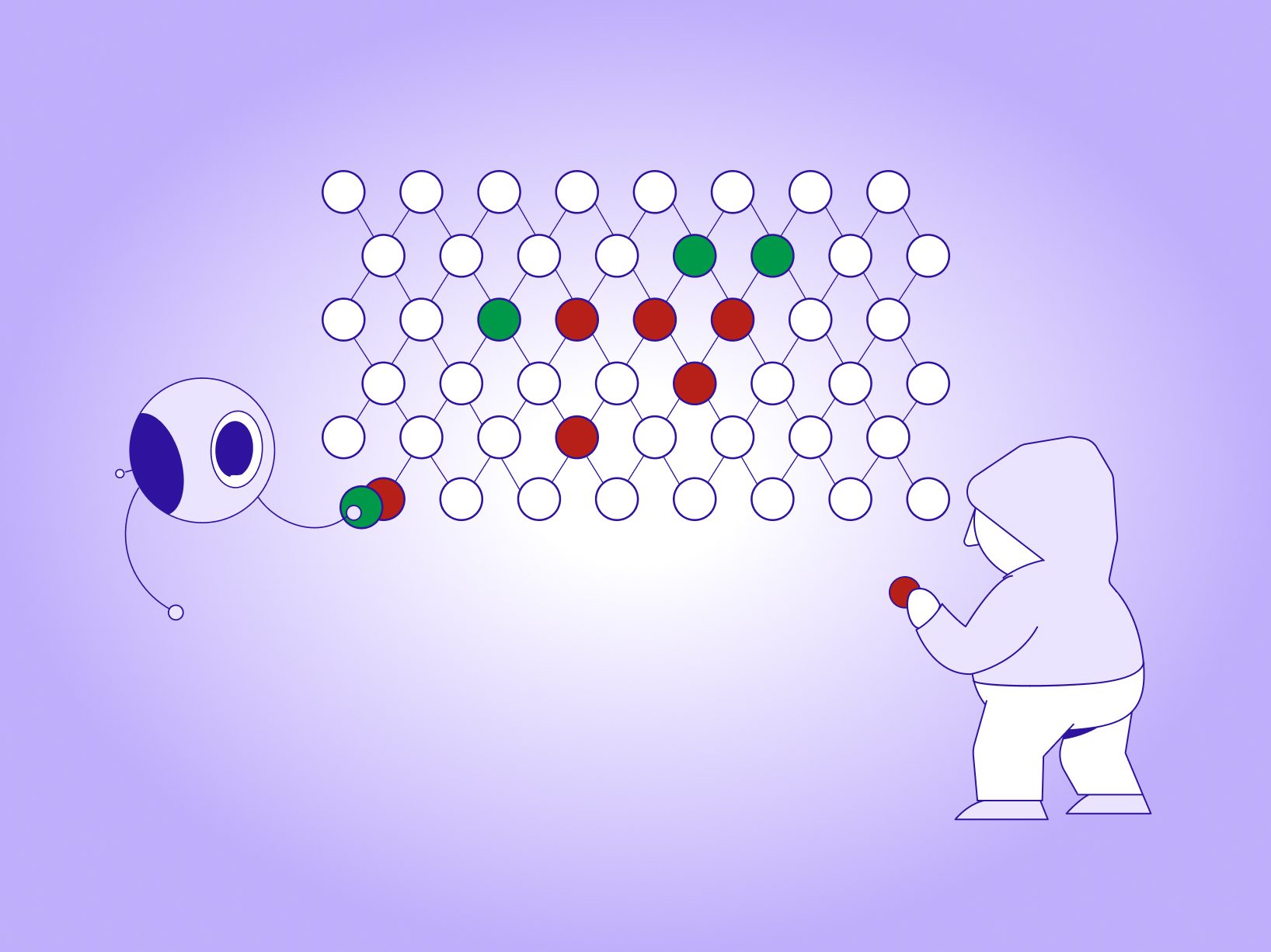
TL;DR
- AI red teaming is structured adversarial testing that surfaces jailbreaks, prompt injection, data leakage, and bias before a model ships
- Automated scanners generate attack volume fast, but a human still has to decide whether a flagged output is a real violation or noise
- Every red-team program runs on two labeled assets: the adversarial prompts and the severity scores attached to each model response
- Multi-annotator scoring, disagreement tracking, and calibration against known jailbreaks make red-team findings defensible to auditors, not just engineers
- The teams that get this right treat red-team data production as its own pipeline, not a byproduct of the testing tool
If your chatbot has been in production more than a few weeks, someone outside your team has already tried to jailbreak it. Most of the time nothing comes of it. Occasionally a screenshot of the model saying something it shouldn't makes it into a Slack channel, or a reporter's inbox.
The usual fix is a one-time automated scan before launch, followed by a report full of flagged prompts nobody fully triages. That report is a start, not a finding. Somebody still has to decide whether each flag is a real safety failure or noise, which is where labeled data enters the picture. This piece covers what AI red teaming tests for and how that labeling actually happens.
What is AI red teaming
AI red teaming is structured adversarial testing where testers deliberately try to break a model's guardrails, using prompt injection, jailbreak prompts, and edge-case inputs, to find safety and security failures before someone outside the company finds them first. Unlike traditional penetration testing, it evaluates a probabilistic system, so the same attack can succeed on one run and fail on the next.
That non-determinism is the reason AI red teaming exists as its own discipline. A model might refuse a harmful request nine times out of ten and comply on the tenth, depending on phrasing or conversation history. Red teaming exists to find that tenth case before a user does.
Teams sometimes call this llm red teaming specifically when the system under test is a language model, though the same discipline applies to image, audio, and multimodal models. A full program covers the base model, any retrieval pipeline feeding it outside documents, and connected tools an agent can call.
Want the fundamentals first?
See how labeling pipelines get built before you get into anything red-team specific.

Why AI red teaming matters now
Two years ago, most companies running a language model were doing single-turn chat. Now the same companies ship agents that browse, call APIs, and take actions on a user's behalf. Every new capability is a new attack surface, and the blast radius of a jailbreak went from an embarrassing chat log to an agent executing an action it shouldn't have.
Regulators have noticed. Frameworks emerging in the EU, plus sector guidance in finance and healthcare, increasingly expect documented adversarial testing on ai red teaming models, not just a claim that a model was safety-tuned. For regulated teams, red-team results feed directly into audit evidence.
That documentation requirement is where ai safety testing stops being a one-time scan and becomes an ongoing record: which adversarial prompts ran, how each response was scored, and by whom.
The vulnerability classes red teams test for
Most programs organize coverage around a handful of recurring failure modes. Each one needs a different kind of adversarial input and a different scoring rubric.
Jailbreaking: Prompts built through roleplay, hypothetical framing, or multi-turn escalation that talk a model into producing content its guardrails should block. Most successful jailbreaks build across several turns rather than landing in one prompt.
Prompt injection: Instructions hidden in a document, webpage, or tool output that override the system prompt without the user ever typing them. Indirect injection, where the attack doesn't come from the user at all, is the harder version to catch.
Data leakage: Getting a model to reveal training data, system prompts, or retrieval-index content that shouldn't be exposed to the current user. This category overlaps heavily with PII handling.
Bias and toxicity: Outputs that discriminate, stereotype, or turn hostile under adversarial pressure, even when the same model behaves well on straightforward prompts.
Pro tip: Score these categories separately, not as one pass or fail result. A model hardened against jailbreaking but leaky on data extraction will look safe on an aggregate score while carrying a real, specific liability underneath it.
Manual, automated, and hybrid red teaming
Automated scanning frameworks can throw thousands of adversarial prompts at a model in an afternoon, cycling through known jailbreak patterns and mutation strategies. Search interest in ai red teaming tools has risen as more teams look to automate that first pass. That speed is genuinely useful for regression testing, confirming whether a fix for last month's exploit is still holding after a model update.
What automation doesn't do well is judgment. A scanner can flag that a response matches a toxicity pattern. It can't reliably tell you whether the model was quoting a user's harmful input back to explain a refusal, or generating harmful content on its own.
Most mature programs run hybrid: automation for coverage and regression, human review for anything flagged as ambiguous or high severity. Structured evaluation of chat outputs is what makes that human layer scale past a handful of engineers eyeballing a spreadsheet.
Turning raw prompts into an audit-ready dataset
See how preference data, agent traces, and red-team scoring get produced under one set of quality controls.
How labeled data powers AI red teaming
Every finding a red-team program produces is the output of a labeling process, whether anyone calls it that or not. There are two datasets underneath every red-team report, and both need the same rigor as any other training dataset.
The first is the adversarial prompt set itself. Someone has to write, source, or generate the jailbreak attempts and injection payloads, then categorize each one by attack type so the taxonomy stays consistent as the labeled prompt library grows past a few hundred entries. A red teaming dataset that isn't tagged by technique is nearly impossible to use for regression testing later.
The second dataset is the severity label on each model response. Did the model comply, partially comply, refuse but leak a hint, or refuse cleanly? Was a flagged response an actual violation or a scanner false positive? Those calls need a defined rubric, more than one reviewer on ambiguous cases, and a record of who decided what.
A red-team report an auditor can't trace back to specific reviewer judgment isn't evidence. It's an opinion with a timestamp.
Comparison: what changes when red-teaming data is labeled well
Building a red-teaming data pipeline: from prompt to labeled finding
Teams running this well use the same stages security teams already know: define scope, generate probes, evaluate responses, then patch and iterate. What differs is what happens inside evaluate responses.
Scope comes first: which model, which application layer, which harms matter this cycle. Probes get pulled from a maintained prompt library, tagged by technique, and routed to the model under test. Responses come back and get scored against a rubric, with borderline cases sent to a second reviewer instead of left to one person's read.
Cases where reviewers disagree get flagged for adjudication instead of silently resolved by whoever labeled it first. Confirmed findings feed back into guardrail training, and the fix gets re-tested against the same prompt set to confirm it held.
Pro tip: Keep a fixed set of previously confirmed jailbreaks as a standing regression suite, separate from new adversarial exploration. Teams that only test new attacks lose visibility into whether old fixes are still holding after the next model update.
Already running preference labeling at scale?
The same reviewer calibration and disagreement tracking apply directly to red-teaming pipelines.
How TaskMonk supports AI red-teaming data programs
Red-teaming data has a specific problem most annotation work doesn't: the content is deliberately harmful, the judgment calls are genuinely ambiguous, and a wrong call carries more weight than a mislabeled bounding box. The platform underneath a red-teaming program has to handle that.
Majority Vote with a configurable Consensus Percentage routes a set share of red-team responses to multiple reviewers instead of one, so severity calls on jailbreak and bias findings don't rest on a single read. Disagreement Score then surfaces where reviewers actually disagree, shown as a variance-based comparison in the project's progress report, which tells a program lead which findings need adjudication before they're treated as confirmed.
Golden Data and Golden Accuracy let a team import known, correctly-labeled jailbreak examples and interleave them blind into normal review queues, so new reviewers get calibrated against real cases instead of a policy document alone.
Clarification Flow gives reviewers a way to flag an ambiguous response and query a dedicated Clarifier role mid-task, catching miscalibration before it happens instead of after.
For the review environment itself, TaskMonk's Dynamic Field and chat-evaluation widgets are built for scoring multi-turn conversations, which matters since most real jailbreaks build across several turns.
On the compliance side, the platform runs on role-based access with field-level restriction, SOC 2 certification, ISO 27001, and HITRUST, with VPC and on-premise deployment available for programs where adversarial content can't leave a client's environment. Comparing annotation tools built for this kind of evaluation work is a reasonable next step before committing to one.
TaskMonk has processed 480M+ labeling tasks across 6M+ labeling hours, supports 10+ Fortune 500 teams, and holds a 4.6 out of 5 rating on G2. [
See the review workflow on your own queue
Run a pilot batch through the platform before committing to a full program.
Conclusion
The invisible cost of skipping the labeling layer isn't a missed vulnerability. It's a red-team report nobody can defend six months later, when a security review asks how a specific finding was scored and by whom, and the honest answer is that a scanner flagged it and someone signed off without a second look.
Teams that get this right stop treating red-team data as a byproduct of the testing tool and start treating it as its own labeled dataset, with a rubric, multiple reviewers on the calls that matter, and a record of who decided what. The scanner finds the candidates. Labeling is what turns a candidate into a finding worth acting on.
TaskMonk's review and calibration workflows are built for exactly that layer. If your program is still running on a single reviewer's read, that's the place to start.
Frequently Asked Questions
What is AI red teaming?
It's the practice of deliberately attacking an AI system with adversarial prompts to find safety and security failures before a real user does. It needs to run continuously, since the same model can pass a test today and fail it again after a prompt or model update.
What is automated AI red teaming and how is it used?
Automated red teaming uses scanning frameworks to run large volumes of known jailbreak and injection patterns against a model, flagging responses that match risky patterns. It's mainly used for coverage and regression testing, not as a substitute for human review on anything flagged as ambiguous or high severity.
How is AI red teaming different from traditional penetration testing?
Traditional pen testing evaluates a mostly static system, where a server either has a vulnerability or it doesn't. AI red teaming evaluates a probabilistic one, where the same input can produce a different output depending on phrasing or randomness in generation, which means more attempts per vulnerability and a labeling process to decide which attempts actually count.
What role does labeled data play in AI red teaming?
Two roles: the adversarial prompt library needs to be tagged by attack type so a team can track coverage, and every flagged response needs a human severity label, since automated scanners can't reliably tell a genuine violation from a false positive. Without that layer, a red-team report is a list of maybes, not confirmed findings.
How much does AI red-teaming data labeling cost?
It depends mostly on scope and review depth, which is why most vendors, TaskMonk included, quote it per engagement rather than a flat rate. A narrow program testing one chatbot costs far less than an ongoing multi-turn agent evaluation program with multi-annotator review on every flagged case, and that variance is real, not a vendor hiding a number.
Who should run AI red teaming, an internal team or an outside vendor?
It depends on what you're optimizing for. Internal teams know the product and policy context, which helps with borderline calls. Outside vendors bring reviewer scale and calibration infrastructure that's expensive to build in-house for a program that only runs a few times a year, which is why most regulated teams end up hybrid.