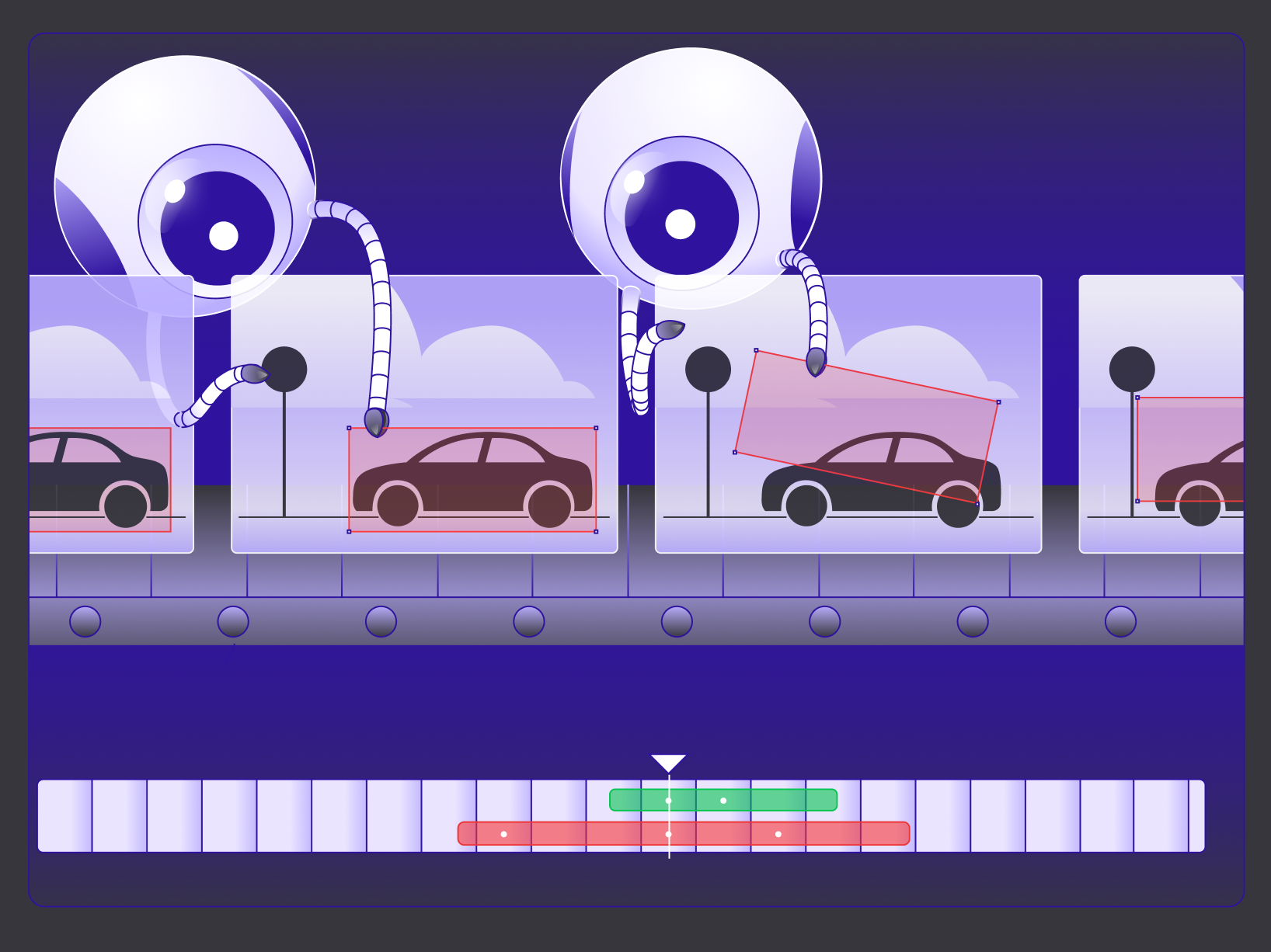
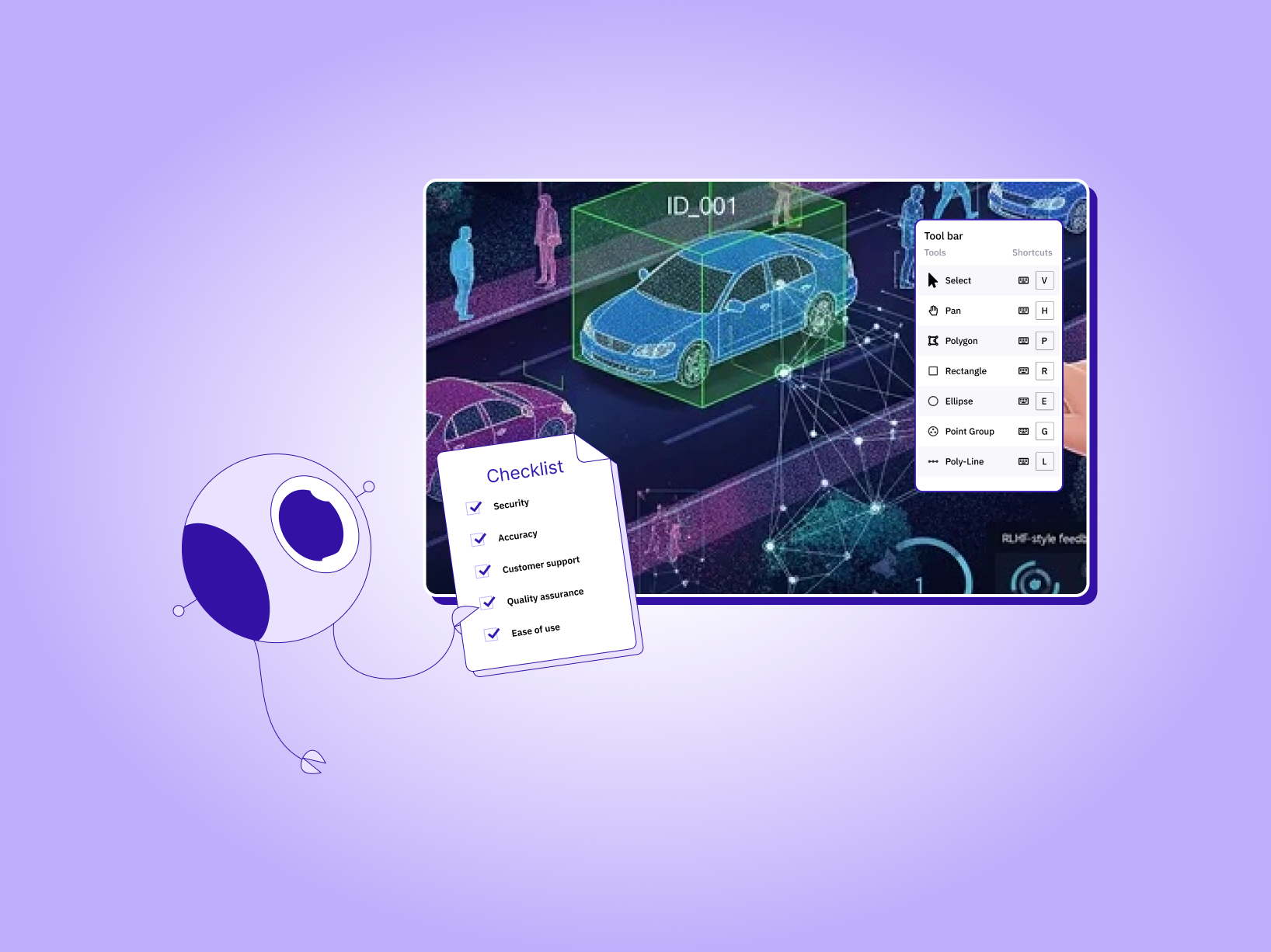
![7 Signs Your Data Labeling Operations Need an Upgrade [2026 Checklist]](https://cdn.prod.website-files.com/668523fcc9f2e4484d048325/66d854add3a195e93bd532e6_image.png)
TL;DR
• A labeling operation that worked at 10k tasks often breaks down at 500k, the warning signs are specific and catchable early.
• The 7 signs cover quality drift, throughput bottlenecks, annotator misalignment, tooling gaps, QCfailures, cost overruns, and model feedback loops.
• Each sign maps to a rootcause and a concrete fix ,not just a suggestion to "scale up."
• Upgrading your labeling operation is not always about switching vendors; it often starts with workflow changes you control.
• TaskMonk's platform addresses all 7 through QC-native workflows, pre-labeling, and annotator routing.
Introduction
If your model's accuracy plateau arrived right after you doubled your training data, something is broken upstream. More data did not help. That means the data itself is the problem — not volume, but quality, consistency, and how your labeling pipeline is managed.
Data labeling operations have a way of masking their own failures. Error rates creep up slowly. Throughput feels "fine" until a deadline hits. QC catches problems after the damage is already done. By the time your ML team flags a training issue back to the annotation team, you're already three cycles behind.
Knowing when to upgrade your data labeling operation matters as much as knowing how. The 7 signs below are the ones that show up most consistently before teams hit a real wall. If two or more apply to you right now, your pipeline has already started to cost you.
Let's get into it.
Sign 1: Your Model Accuracy Stops Improving Despite More Data
The most common assumption when model performance plateaus is that the architecture needs work. Before you tune a single hyperparameter, check the data. If you're adding thousands of labels and seeing no accuracy lift, the new labels are likely introducing more noise than signal.
This happens when annotation guidelines drift over time. Annotators who joined six months ago were trained on version 1 of your spec. New annotators are working from version 3. No one noticed the inconsistency between batches because QC was checking individual tasks, not cross-batch consistency.
The fix is not more data. It is tighter inter-annotator agreement (IAA) tracking across the full dataset — not just within a single QC round. If your current tooling does not surface IAA at the project level over time, you're flying blind on consistency.
Pro tip: Track IAA week over week, not just per task. A score of 0.85 that drops to 0.78 across three consecutive weeks is a stronger warning signal than any single outlier batch.
Sign 2: Throughput Drops Every Time You Try to Scale
Your team can handle 50,000 tasks a week reliably. The moment a project needs200,000 tasks in the same window, quality drops, turnaround slips, and the ops team starts firefighting. This is not a capacity problem — it's a workflow architecture problem.
Manual task assignment does not scale. If someone on your ops team is still deciding which annotator gets which task, that decision point becomes the bottleneck. Task routing needs to be rule-based and automated: match tasks to annotators by domain expertise, language, past accuracy on similar task types, and current workload.
The same applies to QC sampling. Static sampling rates ("check 10% of everything") miss the point at scale. High-risk tasks — new annotators, edge-case categories, low-confidence pre-labels — need higher sampling rates. Routine tasks from proven annotators need less. If your QC rate is flat regardless of risk, you're spending review cycles in the wrong places.
Pro tip:If throughput drops when you add more annotators rather than improving, the bottleneck is almost certainly task allocation, not annotator count.
Sign 3: You're Running Multiple QC Rounds and Still Shipping Errors
Three rounds of QC should mean a clean dataset. If it doesn't, the problem is the method, not the number of rounds. Running the same Maker-Checker process on every task type wastes review time on low-risk tasks and under-covers the hardones.
Different task types carry different risk profiles. A bounding box label on a clear product image is low risk. An entity relationship label in a legal document is not. A medical image segmentation task needs different QC logic than a text classification task. If your platform uses one QC method for everything, it is not designed for complex annotation programs.
The three methods that cover most programs like Maker-Checker (one annotator, one reviewer), Maker-Editor (annotation then structured edit), and Majority Vote(consensus across multiple annotators), should be selectable per task type ,per project, and ideally per annotator risk tier. If you can not configure this without engineering support, your QC layer is too rigid.
Sign 4: Annotators Are Guessing on Edge Cases
Every annotation project has edge cases, like objects that are partially visible, ambiguous categories, overlapping labels. What separates a good labeling operation from a failing one is what annotators do when they hit one. If the answer is "make their best guess and move on," you will find those decisions scattered across your dataset with no way to audit them later.
Edge cases need a defined escalation path. Annotators should have a clear way to flag a task as ambiguous, a process for resolution, and a documented record of how that edge case was handled. Over time, those decisions become your guidelines — not the other way around.
If your annotators are resolving ambiguity in isolation because asking for guidance slows down their throughput numbers, your incentive structure is working against your data quality. Throughput metrics should be adjusted to account for legitimate flags.
Pro tip: Build a running edge case log for every project. When the same edge case appears five times, it needs a formal guideline update, not five individual judgment calls.
Sign 5: Your Labeling Cost Per Task Is Rising Without Explanation
If cost per labeled task keeps climbing but neither volume nor complexity has changed significantly, something in the workflow is leaking. The most common culprits: high rework rates, over-sampling in QC, annotator turnover and retraining costs, and manual ops overhead that scales linearly with volume.
Pre-labeling is the fastest way to address cost per task on repetitive or pattern-heavy datatypes. If your platform does not support AI-assisted pre-labeling where a model generates a draft label that a human then reviews and corrects rather than building from scratch, you're leaving real efficiency on the table.
The second cost driver most teams overlook is annotator churn. Replacing an annotator in a domain-specific project takes time to rebuild accuracy. Platforms that route tasks to annotators based on demonstrated domain expertise and maintain those relationships over time cost less per quality label than high-churn commodity annotation pools.
Sign 6: Your ML Team Can't Trace a Model Error Back to the Label
When your model misclassifies something, can your team find the label that caused it? If the answer involves manually digging through annotation batches, exporting CSVs, and hoping metadata was preserved, your pipeline lacks the audit trail it needs.
Label lineage: knowing exactly who labeled a task, under which guideline version, through which QC method, at what time, is not just useful for debugging. It is the foundation of data governance for enterprise AI programs. It is also what makes dataset versioning possible: if you need to retrain on data labeled before a guideline change, you need to know which tasks those are.
If your annotation workflow does not attach this metadata to every label as a matter of course, you are not managing a labeling operation, you're managing a labeling guess.
Sign 7: You Have No Feedback Loop Between Model Performance and Label Quality
Labeling and model training should be a closed loop: model performance tells you where your labels are weak, and that feeds back into annotation priorities. If those two functions operate independently — ML team on one side, annotation team on the other — you're optimizing each in isolation.
Active learning is the structural answer to this problem. When your labeling platform can ingest model uncertainty scores and use them to route the most valuable tasks to annotation first, you stop labeling at random and start labeling with precision. The hardest examples for the model get labeled. The easy ones get deprioritized or handled with automation.
Teams that implement active learning loops consistently get better model performance per labeled task than teams that label evenly across the dataset. That's not a marginal improvement. It changes the economics of your annotation program.
How TaskMonk Handles All 7 signs
Most labeling operations fail because the platform and the workflow were designed for a different scale. What works at 50k tasks starts to show cracks at 500k.The signs above are predictable — but only fixable if the tooling supports the change.
Three configurable QC methods: TaskMonk supports Maker-Checker, Maker-Editor, and Majority Vote, that are selectable per task type and per annotator risk tier. QC sampling rates adjust based on risk signals, so high-risk tasks get more review and proven annotators don't getover-sampled. Error rates drop without inflating review costs.
AI-assisted pre-labeling: TaskMonk's active learning models watch your human annotators and generate pre-labels for subsequent batches. Annotators review and correct rather than build from scratch. On high-volume, pattern-heavy datasets, this can reduce annotation time by 40-60% without sacrificing accuracy.
Affinity-based annotator routing: Tasks are matched to annotators by domain expertise, past accuracy on similar task types, language, and current workload. A legal document NER task goes to annotators who haveproven accuracy on legal text — not whoever is available. This is the mechanism that keeps IAA high at scale.
Full label lineage: Every label in TaskMonk carries annotator, guideline version, QC method, and timestamp metadata. When your ML team surfaces a model error, you can trace it to the exact label in under a minute. That makes dataset versioning and targeted retraining possible— not just in theory, but in practice.
And we speak from real, tangible experience. TaskMonk has processed 480M+ tasks across 10+ Fortune 500 clients, holds a 4.6/5 rating on G2, and has saved clients over $10M in labeling costs. The platform handles text, image, video, audio, LiDAR, and DICOM in a single workflow environment.
If you're seeing two or more of the signs above in your current operation, book a demo with the TaskMonk team. They'll walk through your specific pipeline and show you exactly where the gaps are before you commit to anything.
Conclusion
The cost of a failing labeling operation does not show up on a dashboard. It shows up when a model goes to production and underperforms, when your ML team spends three days debugging a data issue they can't trace, when a dataset needs to be re labeled from scratch because the guidelines changed six months ago and no one updated the spec. These are not rare events. They are what happens when annotation operations are allowed to scale without structure.
The teams that avoid this are not necessarily the ones with the biggest annotation budgets. They're the ones who track IAA over time, configure QC by task type, route tasks to annotators who have earned the domain, and treat label lineage as non-negotiable. These are workflow decisions, not platform decisions —though the right platform makes each of them significantly easier.
Seven signs, seven root causes, seven things worth fixing before your next major training run. Pick the one that maps most directly to where your program is right now.
Frequently Asked Questions
How do I know if my data labeling quality is actually causing model performance issues?
Start with cross-batch IAA analysis rather than task-level QC scores. If annotators are internally consistent within a batch but inconsistent across batches, you have a guideline drift problem that per-task QC won't catch. Pull labels from three different time periods, run them through the same accuracy check, and look for systematic divergence. If accuracy varies by more than 8-10 percentage points across cohorts, the data is the issue — not the model.
What's the right QC sampling rate for a data labeling operation at scale?
There's no universal number. The right rate depends on task complexity, annotator experience tier, and the consequence of an error in your model. A reasonable starting framework: 100% sampling for new annotators in their first two weeks,25-30% for medium-complexity tasks from mid-tier annotators, and 5-10% for routine tasks from annotators with a demonstrated accuracy track record. The key is that sampling rates should be dynamic, not static. If your platform forces a single rate across the whole project, you're either over-reviewing low-risk tasks or under-reviewing high-risk ones.
When should I switch from manual annotation to a pre-labeling or automated approach?
When more than 40% of your annotation volume is tasks your model can already handle at high confidence, you're paying human rates for machine-level work. The practical test: run a sample batch through your model, check confidence scores ,and separate the high-confidence tasks from the ambiguous ones. High-confidence tasks should go through a review-and-correct workflow, not a build-from-scratchworkflow. This is what pre-labeling enables. Don't wait for a cost crisis tomake the switch. the savings compound.
How important is annotator domain expertise for specialized datasets?
It depends on how much ambiguity is in the task. For clear-cut object detection on common categories, domain expertise matters less than careful guideline adherence. For anything involving nuanced judgment like medical imaging, legal document classification, financial sentiment, industrial defect detection, domain expertise is the difference between IAA of 0.7 and IAA of 0.9. The practical implication: for specialized programs, build a dedicated annotator pool and don't rotate those annotators out for variety. Consistency of judgment over time is worth more than fresh eyes.
What does label lineage mean in practice, and why does it matter?
Label lineage means every label in your dataset is traceable: who labeled it, when, under which version of the guidelines, through which QC process, and whether it was reviewed. It matters for three reasons. First, debugging: when your model fails on a specific category, you can identify whether all the mislabeled examples came from the same annotator cohort or the same guideline era. Second, dataset versioning: if your annotation spec changes, you know exactly which tasks to re-review and which to trust. Third, compliance: enterprise AI programs increasingly need audit trails. Labels without lineage are liabilities in regulated industries.
The data platform behind enterprise AI.