RLHF and Evaluation Data for More
ReliableLLMsandAIAgents
The execution layer for LLM and agent data. Preference ranking, human evaluation, agent traces and red-team data, built for rigorous model alignment, agent evaluation, and continuous improvement.
Advanced features for LLM and AI agent data operations
Generate preference data, label agent traces, evaluate responses and govern quality on one platform.
Preference and ranking datasets built for RLHF
Point-wise and pairwise judgments scored against rubrics for helpfulness, accuracy, style and safety. Track inter-annotator agreement, enforce review gates and export clean splits for SFT and RLHF.
Human evaluation and guardrail scoring
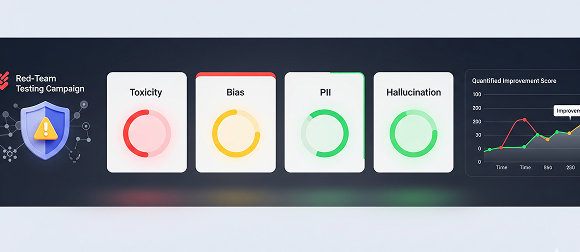
Score hallucinations, missing citations, PII, toxicity, bias and jailbreak susceptibility. Run red-team campaigns and track issue classes as prompts, models and guardrails change.
Agent and tool-use trace annotation
Label multi-turn conversations, function calls, tool arguments and results, including planner-executor steps and recovery attempts. Capture reasons and outcomes to teach reliable tool selection and failure handling.
RAG grounding with span-level citation checks
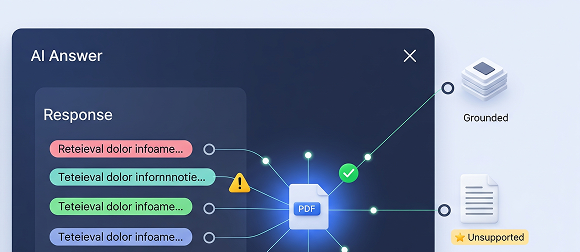
Score retrieval quality and source coverage. Link claims to citations, flag unsupported spans and classify error types to tune chunking, retrieval and answer synthesis.
Data QA, metrics and lineage
Gold tasks, consensus and blind checks, with scorer drift and backlog health monitored. Versioned guidelines and complete lineage carry every label from raw input to export.
APIs, webhooks and storage integrations
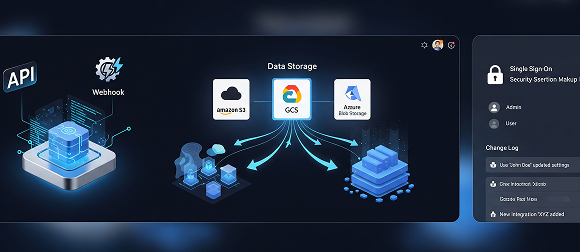
Connect S3, Azure or GCS, trigger jobs through the REST API and SDKs, fire webhooks on task events and stream JSONL or CSV exports into training pipelines.
Top AI training data use cases for LLMs and agentic AI
From instruction tuning and RLHF preference data to RAG grounding, agent evaluation and safety red teaming, Taskmonk helps keeps the data behind your models tight, testable and compliant.
Instruction tuning datasets
Curate instruction-response pairs for edge cases and disambiguation, scored against rubrics for helpfulness, correctness and tone. Version examples, track reviewer alignment and export balanced splits for SFT.
RLHF and RLAIF preference data
Produce point-wise and pairwise judgments with calibrated scorer programs and gold tasks. Monitor agreement, study disagreement patterns and feed reward models or AI-feedback loops with auditable data.
Human evaluation sets for chat, Q&A & summarization
Build test sets for helpfulness, factual accuracy, style and safety. Tag error classes, set acceptance thresholds and catch regressions before a model or prompt change ships.
RAG grounding and retrieval quality
Label retrieval quality, coverage and source fidelity. Link claims to citations at span level and flag unsupported content to tune chunking, re-ranking and synthesis.
Agent and tool-use traces
Annotate function calls, arguments, tool outputs, planner-executor steps and recovery attempts. Teach agents reliable tool selection, argument formatting and fallback behaviour.
Red-team data for model safety
Generate adversarial prompts and score responses for PII, toxicity, jailbreaks, bias and policy violations. Triage by severity, attach exemplars and measure mitigation across releases.
The complete execution layer for LLM and agent data
Taskmonk's data annotation platform and expert services, applied to preference data, evaluation, agent traces and RAG grounding.
Define rubrics, exemplars and gold tasks. Set sampling, acceptance thresholds and error classes. Version guidelines and attach lineage to every record.
Execute
Run annotate, review, consensus and sign-off with affinity-based task allocation and SLAs. Use assisted labeling and scorer training, and resolve disagreements without masking quality issues.
Audit
Monitor accuracy, agreement and scorer drift on dashboards. Inspect confusion matrices and regression flags, trace any label to its guideline version and reviewer actions, and export audit packs for risk teams.
Automate & integrate
Connect buckets and pipelines through APIs and webhooks. Enforce retention and egress policies, trigger rebuilds when datasets change and ship versioned, manifest-based exports into training and eval jobs.
Enterprise-grade security for LLM and agent data
Protect sensitive corpora and agent logs without slowing delivery.
SSO and SAML, SCIM provisioning, least-privilege RBAC, scoped API tokens, IP allowlists, and time-bound elevation with approvals and full session logging.
Keys & encryption
Customer-managed keys (KMS), envelope encryption, TLS 1.2+, automatic key rotation, secrets vaulting, and integrity checks and watermarking on exports.
Audit & compliance
Immutable audit logs and dataset lineage, retention and egress policies, change-management workflows, and evidence packs for security and risk teams. Hosted on Azure with SOC 2, ISO 27001 and HITRUST.
The AI data platform behind 800M+ labeling tasks, built for LLM and agent data operations
Production operations proven over 10+ years, now applied to preference, evaluation and agent data.
Proven at scale
900M+ labeling tasks delivered across platform programs, with 99.9% uptime on Azure and elastic capacity that flexes from 18 to 1,200+ associates on demand.
Built for production
Proven templates for preference ranking, RAG grounding and agent traces compress setup time. Elastic reviewer capacity scales without loosening rubric adherence.
Measurable outcomes
Quality gates tie dataset signals to model KPIs such as factuality, helpfulness and safety. Dashboards surface disagreement patterns and drift early, cutting regressions and speeding pre-production acceptance.
Transparent delivery
Weekly QA reports, acceptance criteria and complete lineage per export. Know who labeled what, under which guideline, and why it passed review.
Where LLM and agent data connects
The data your agents act on, from documents to voice to the physical world.
What is LLM data labeling, and how is it different from generic annotation?
LLM data labeling produces the judgments a model learns from: preference rankings, rubric scores, grounded citations and agent traces. Generic annotation tags objects or text spans. LLM labeling scores whole responses against rubrics, so reviewer calibration and agreement tracking matter more than box accuracy.
What quality controls ensure reliable LLM evaluation datasets?
Gold tasks, consensus, blind checks and disagreement scoring, with review gates before export. Scorer drift is monitored, guidelines are versioned and every label traces back to the guideline and reviewer behind it.
How do you protect sensitive model data and agent logs during labeling?
Access runs through SSO and SAML, SCIM, least-privilege RBAC and IP allowlists. Data is encrypted with customer-managed keys, projects can run in your cloud, and immutable audit logs record every action. A pre-processor can redact PII at ingestion.
What integrations and export formats are available, and how fast can we pilot?
Connect S3, Azure or GCS, use the REST API and SDKs, receive webhooks and export JSONL or CSV. Pilots start in days, with the exact timeline set at scoping.
How to detect hallucinations and evaluate RAG grounding with citations?
Score each answer claim by claim: link it to a source span, flag unsupported spans and classify the error. Roll the labels up into grounding and hallucination rates you can track across model and retrieval changes.
What is RLHF data, and what does an RLHF dataset contain?
RLHF data is human judgment on model outputs, used to train a reward model and align an LLM. A dataset holds prompts, candidate responses, point-wise scores or pairwise rankings against a rubric, reviewer agreement and the guideline version behind each label, exported as clean splits for SFT and RLHF.
What is AI red teaming data?
AI red teaming data is adversarial prompts and scored model responses that show where a model fails on jailbreaks, PII leaks, toxicity and bias. Taskmonk generates the adversarial prompts, scores the responses with calibrated reviewers, triages by severity and tracks mitigation across releases. It supplies training and evaluation data, and does not replace a security penetration test.
How is LLM evaluation different from agent evaluation?
LLM evaluation scores a single response, while agent evaluation scores the whole task, including tool calls, planner-executor steps and recovery attempts. Taskmonk labels both: response-level rubrics for chat, Q&A and summarization, and trace-level labels for agents.
What is agent trace annotation?
Agent trace annotation labels each step of an agent run: the function called, its arguments, the tool output and the outcome. Those labels teach agents to pick the right tool, format arguments correctly and recover from failure.
Who labels the data, and how are reviewers qualified?
Calibrated evaluators who are screened, assessed and certified before they enter production, then trained on your rubric with exemplars. Agreement and scorer drift are monitored, and the pool spans 1,763+ qualified experts across 20+ languages.
Ship LLMs and agents on data you can audit.
Preference, tool-use, grounding and safety datasets, governed and export-ready. Trusted by global F500s over 10+ years of production operations.
.svg)



.png)


.svg)



.svg)


.svg)
.svg)

.svg)
.svg)
.svg)
.svg)
.svg)
.svg)
.svg)
.svg)

.svg)
.svg)
.svg)
.svg)
.svg)

.png)